
A Do-It-Yourself Canon
Let us embrace a do-it-yourself musical canon, where each of us builds our own lineage from the music that speaks to us, challenges us, and opens us up—rather than trying to shoehorn ourselves into a canon prepackaged by conservatories, competitions, and the institutions that decided long ago what counts as “great music.”
This is a paraphrase of a call to action from Claire Vaye Watkins’s 2015 essay On Pandering. At the end of that essay, Watkin makes a call to action: “let us embrace a do-it-yourself canon.” Her vision breaks open the standard literary canon and instead calls for writers to build a canon out of the literature they love most deeply.
This is something I've been doing myself and helping musicians do for a long time. Her essay helped me give it a name, articulate its importance, and see how it connects across the arts more generally.
A Real Life Story
A few weeks ago, I was working with a student who’s a very talented cellist. At the beginning of our lesson he asked if we could do some work with the opening of the St John's Passion. It had been a while since I’d looked at that work (10 years probably) so we pulled up the score and a recording. The opening of the St. John’s Passion is an extraordinary harmonic landscape creating so much tension, unfolding over a long pedal point.
Using intervals, scale degrees, and very simple figurations, we started working through the harmony together—trying different possibilities, finding lines, melodies and interval combinations.
Moments like that connect deeply with what Watkins is calling for, and with what I want to help musicians do.
A Do-It-Yourself Musical Canon
I want to help you explore the music you love—the music that connects with you deeply. I want you to get inside those harmonies, melodies, and counterpoints. To take music you love apart, play with it, map it, and understand how it works.
Eventually that music becomes your own.
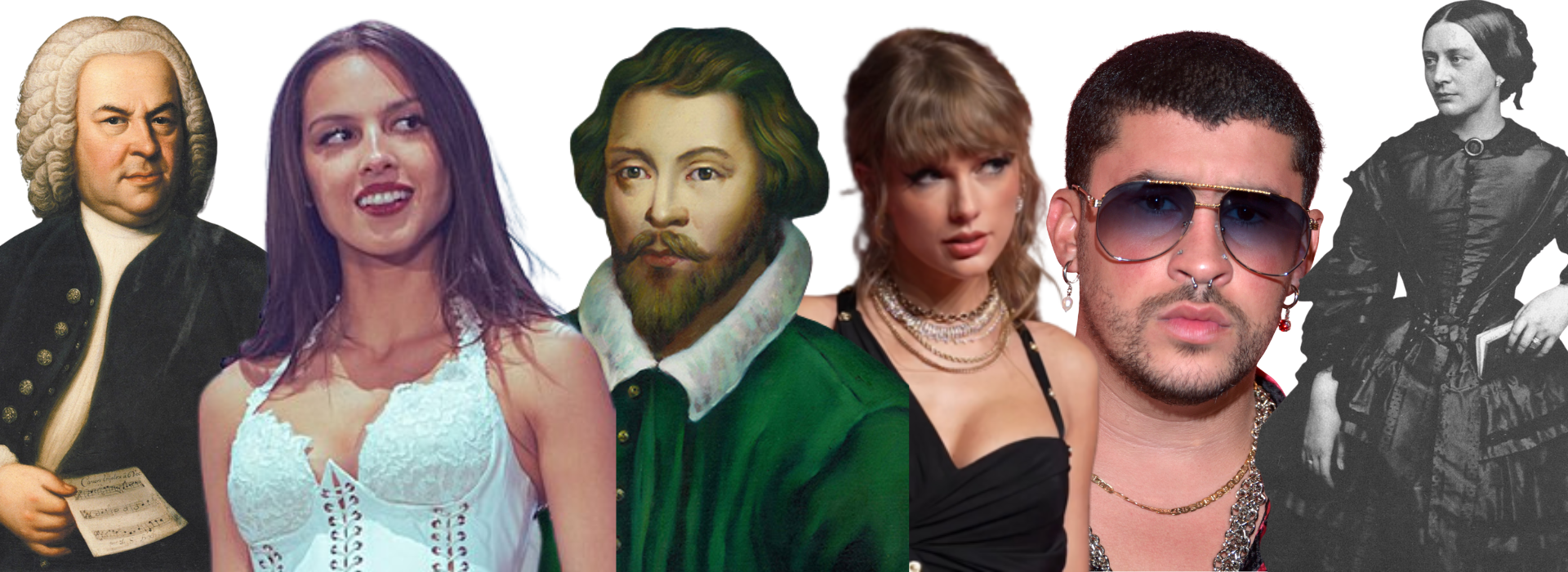
Those musical ideas stop belonging only to JS Bach or Clara Schumann or William Byrd or Taylor Swift or Bad Bunny or Olivia Rodrigo or a film score or a jazz standard or a hymn.
Wherever they comes from, I want you to explore that music deeply and to internalize it so thoroughly that its patterns, gestures, and sounds become something you can carry forward as your own.