
Quincy Jones (1933-2024)
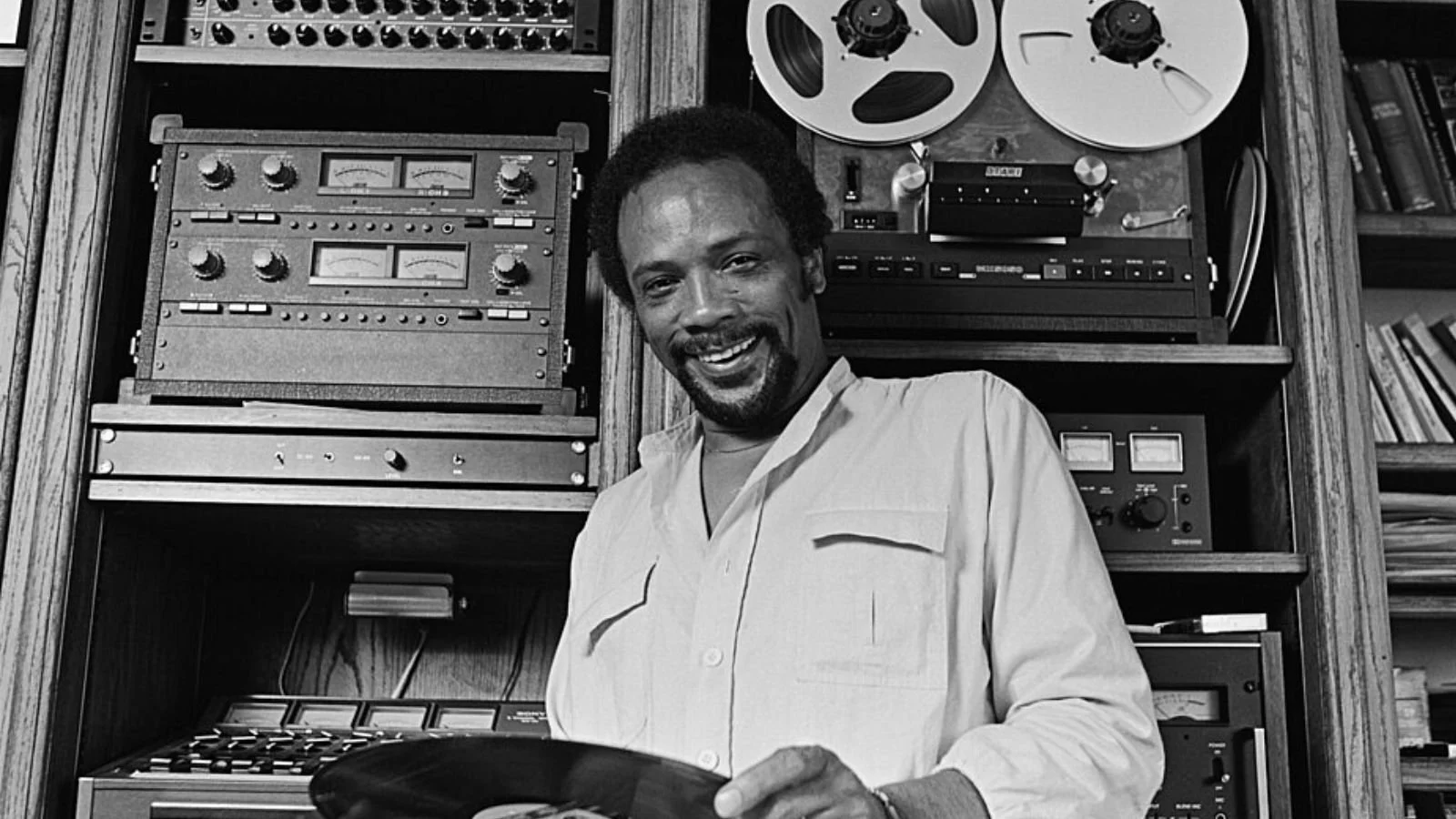
Quincy Jones at home in Los Angeles, surrounded by his recording equipment, August 10, 1980.
Remembering Quincy Jones
Quincy Jones was one of the most prolific and accomplished musicians of the twentieth century. He also studied harmony in Paris with the legendary teacher Nadia Boulanger — a connection that links him, perhaps unexpectedly, to the partimenti tradition. Jones passed away last week at the age of 91. Since hearing the news, I’ve found myself revisiting his music and listening again to interviews reflecting on his remarkable career.
A Remarkable Musical Journey
Jones began as a jazz musician and arranger before traveling to Paris in the 1950s to study with Nadia Boulanger. Over the decades he collaborated with artists across an extraordinary range of styles: working with Frank Sinatra and Count Basie in the 1960s, producing Michael Jackson’s Thriller (still the best-selling album of all time), composing film scores, arranging orchestral works, and shaping popular music in lasting ways.
That barely scratches the surface of an astonishing résumé.
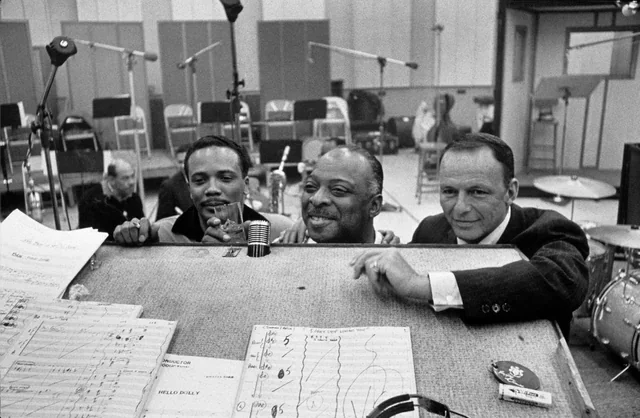
Quincy Jones, Count Basie and Frank Sinatra at a 1964 recording session, Photo: David Sutton
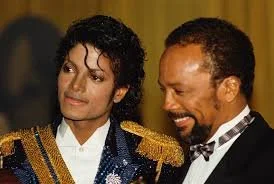
The duo behind Thriller: Quincy Jones and Michael Jackson, whose legendary collaboration redefined the sound of modern pop.
My First Encounter
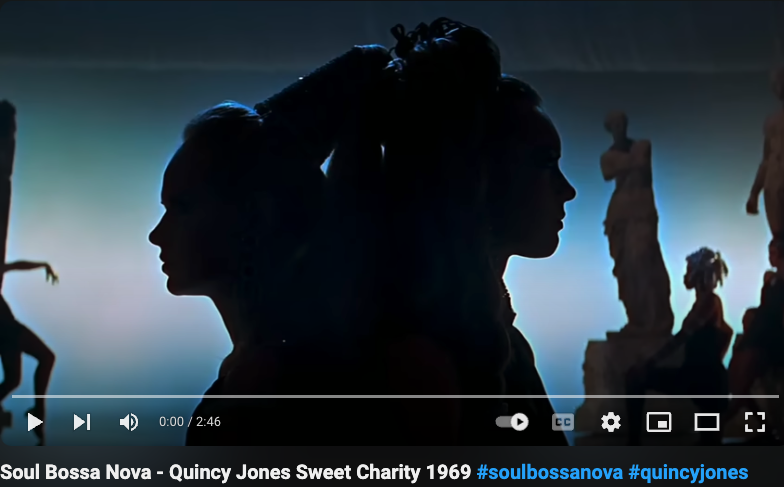
My own first encounter with Quincy Jones’ music came when I played Soul Bossa Nova in my high school jazz band. I remember feeling unbelievably cool playing that groovy piano part. It was one of those pieces that makes you realize music can be stylish, playful, and deeply crafted all at once.
Nadia Boulanger and Partimenti
Later, after I studied at the European American Musical Alliance (EAMA) with musicians in Nadia Boulanger’s pedagogical lineage, I realized Jones had been one of her many students. Boulanger was one of the most influential composition teachers of the twentieth century, and harmony training was central to her approach.
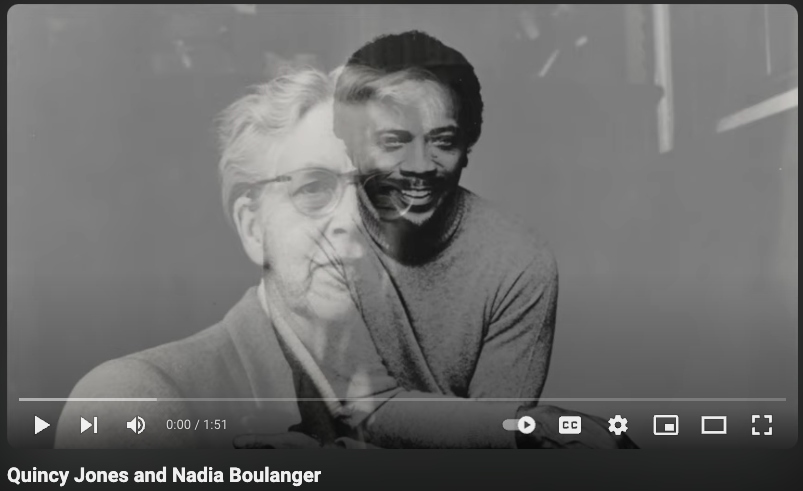
While she likely would have used terms such as basse donnée, the pedagogical roots connect closely to the partimenti tradition — learning harmony through bass lines, patterns, listening, and practical musical fluency rather than abstract theory alone.
Hearing Jones speak about studying with her offers a glimpse into that lineage.

A Legacy Beyond Genre
What makes Quincy Jones especially fascinating is how fluently he moved between musical worlds: jazz, film scoring, orchestral arranging, popular music production, and more. That kind of versatility often reflects deep harmonic training and strong listening skills — precisely the kinds of musicianship partimenti historically cultivated.
A Few Listening Suggestions
If you’re revisiting Quincy Jones’ work, you might explore:
Soul Bossa Nova
Michael Jackson’s Thriller (1982)
Film scores such as In the Heat of the Night (1967) and The Color Purple (1985)
His collaborations with Frank Sinatra and Count Basie, including It Might as Well Be Swing (1964) and Sinatra at the Sands (1966)
Each highlights a different facet of his musical voice.